For CHROs and CEOs, this raises a critical question: Why does traditional classroom training fail at the executive level?
Every year, companies allocate millions of rupees to corporate training programs. Senior executives are gathered in air-conditioned conference rooms, handed colourful notebooks, and subjected to hours of dense PowerPoint presentations. Yet, within less than a week, the retention rate drops close to zero. The workplace behaviour remains completely unchanged.
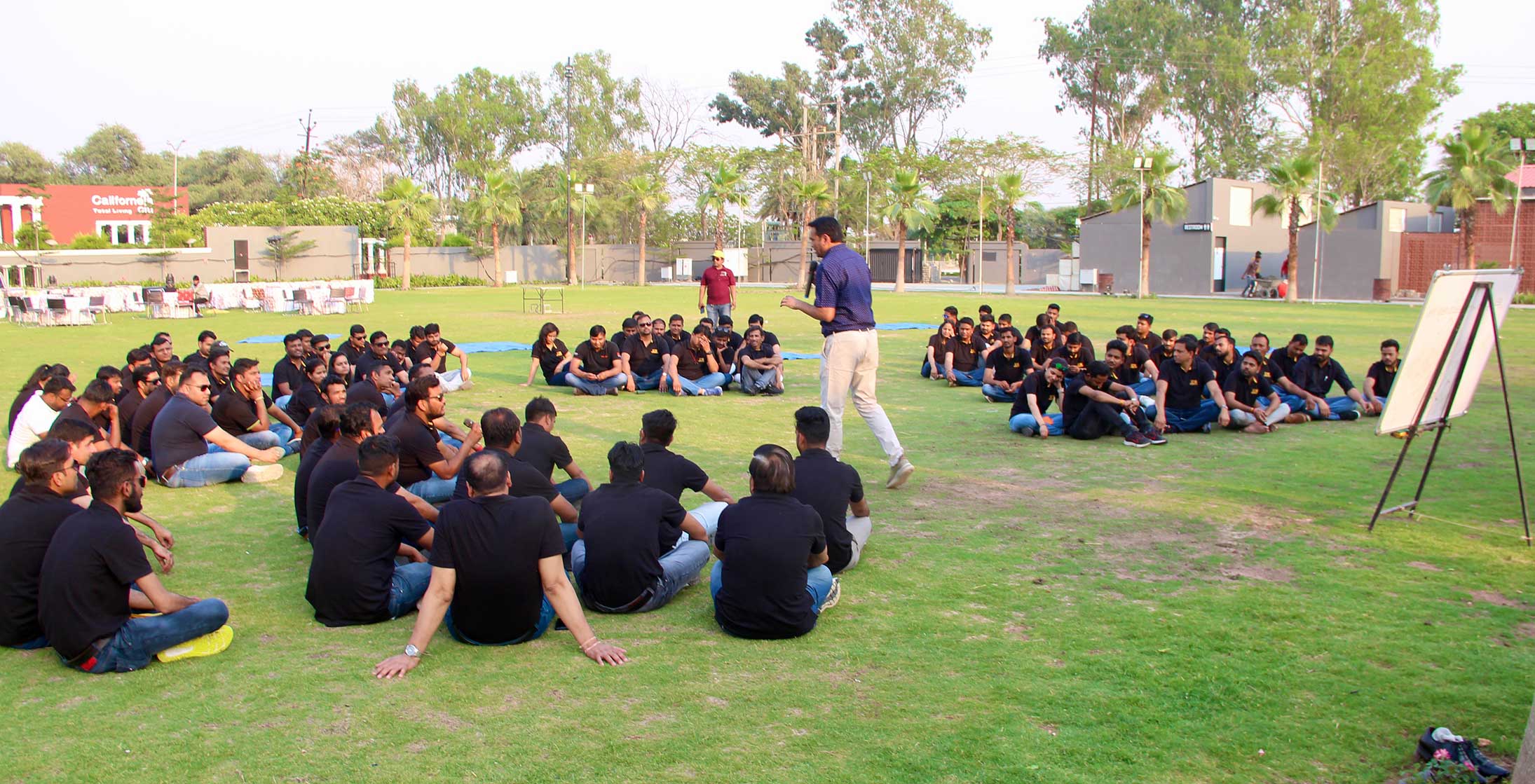
The answer lies deep within human psychology. Senior executives and Top-to-Middle level decision-makers do not suffer from a lack of information; they suffer from behavioural immunity to change. Classroom setups appeal only to the conscious, analytical brain. However, real workplace transformations—like breaking down silos, managing crisis pressure, and dropping ego boundaries—require a deeper subconscious realignment.
The Flaw of “Intellectual Agreement”
In an indoor seminar, when a slide displays “The 5 Principles of Empathetic Leadership,” every manager nods in agreement. But intellectual agreement does not equal behavioural adoption. In a comfortable room, the human ego maintains its defense mechanisms. True default behaviours—such as micromanagement, defensive communication, or a blame-game mindset—never surface in a classroom sandbox.
This is where an Outbound Experiential Framework completely rewrites the training model.
Breaking the Default Subconscious Patterns
When you take an executive team out into neutral, unstructured wilderness environments, their corporate titles lose meaning. Strung up on a high-ropes challenge, navigating an unpredictable outdoor obstacle, or managing team logistics with limited resources, individuals cannot fake their reactions.
The subconscious brain takes over, and real behavioural patterns emerge instantly:
- Who steps up to lead under sudden chaos?
- Who stops communicating when things go wrong?
- How does the team handle a calculated risk failure?
By stepping out of the comfort zone, the defensive walls drop. The expert moderator can then lead live debriefing sessions, helping leaders look directly into their operational mirrors and translate those outdoor real-time realisation back into corporate boardroom strategies.